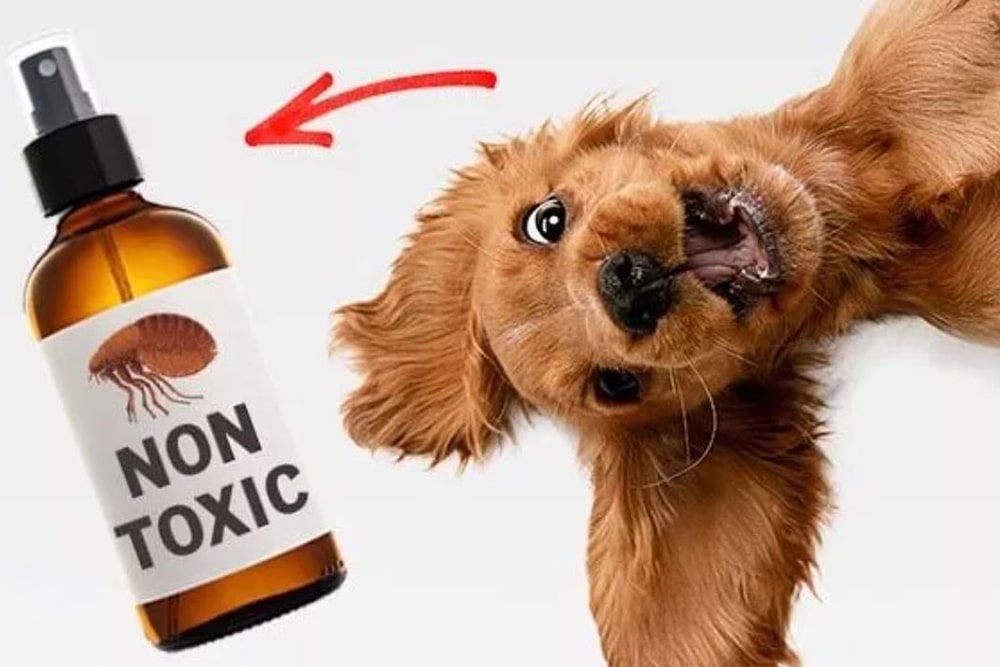
Yikes! Flea season is here. In recent years, the flea population has seemed to boom. Do we now have super fleas? Are fleas developing resistance to treatments? Is our community becoming overrun with fleas? Flea treatments are not the solution to controlling fleas; developing effective flea management techniques is imperative especially in a home with sensitive individuals?

What Are Fleas?
Fleas are small insects that survive by feeding on animal or human blood. Their bites can cause discomfort, itchiness, and irritation and sometimes can spread communicable diseases.

Are Fleas Resistant To Treatments?
There is a debate whether fleas are developing resistance to treatments. Michael K. Rust, PhD, professor of entomology at the University of California, Riverside, states research does not support flea resistance. Dr. Rust recently published a thorough review of internationally published research, along with live animals, in an article in Insects. The research summarized that resistance is not the issue.
Instead of blaming resistance, Dr. Rust and other experts have inferred that flea management techniques need to improve. There may also be an increase in the flea population due to climate change; either way, pet owners need to increase their diligence. These diligent measures include poison-free approaches to flea treatment.

Poison-free Approaches to Flea Management
The CDC recommends vacuuming often and washing pet beds and stuffed toys frequently. Vaccuum, Vaccuum, Vaccuum, and then empty the contents in an outdoor trash bin right away. Fleas have life cycles that make them durable even with the best flea control agents. There is no method for a home that can prevent fleas with flea treatment alone, even monthly visits from an exterminator cannot effectively remove fleas as fleas travel and can be brought into the home by a pet or a human.

In addition to vacuuming and washing bedding, there are also other non-poisonous treatments that are available in most kitchens. For example, soak garlic in vinegar, then add cooking oil and wipe down the floors (If the floors are too slippery, leave the house for several hours then wash down the floors with vinegar water to wipe away the oil). The fleas cannot tolerate the oil.* Also, consider lightly spraying the pet bed.
Other concoctions include rosemary, lemon, or lavender buds soaked in water*. And, a baking soda paste or salt spread out on the floor tends to work well on the pet (temporarily), and burnt gluten-free flour helps relieve itching for the affected pet.* Regular baths with a gentle soap such as that used for a sensitive person works well.
Products such as cooking oils, aloe vera, and other food-quality products can be wiped on the dog to smother the fleas, then bathe the dog after a few hours. *
*These techniques have not been cleared by a veterinarian. Consult a professional prior to implementing. And, contact the manufacturer of any flooring, furniture, or other items prior to use to ensure the safety of the product.

Flea Treatments On Pets
With a sensitive person in the household, consideration must be taken before applying flea treatments to a pet. Although most people will not notice the chemical after application, a sensitive person can react to the chemical for several days especially if in a confined space such as travelling in a car or in a private home. And, they may be contracting the poison on the hands or face when handling the pet.
Pesticide Methods of Flea Management: How To Prepare

The purpose of this article is to provide insight for flea management with a sensitive person. If the flea infestation is beyond basic management and you are unable to get the home under control, calling in a professional may be the best solution. However, when considering using poisons in the home with a sensitive person strategizing and special care is required. The effort may seem substantial, but it is worth the effort.

- Make arrangements, in advance to keep the sensitive person away from the home for several days.
- Cover all areas with plastic bags or towels where the sensitive person may frequent such as the computer.
- Put away any items that the sensitive person may handle or chew.
- Put all toiletries especially toothbrushes, in a plastic bag.
- Ensure that ALL pet food and water dishes are emptied and put in the dishwasher.
- Ensure that no loose food for people or pets is anywhere in the home including in the couch or under chairs. Spraying is poison and these crumbs will be contaminated.
- Ensure that no outside water containers, plant pots, or any place where water may pool even the slightest to protect your pets and the wildlife from contamination.
- Ensure that all foods (even packaged) and dishes are put away or placed in a plastic trash bag prior to treatment.
- Stay away from the home longer then the minimal recommended by the company.
- BEFORE the sensitive person is permitted in the home, use several washable rags with vinegar water (and Lysol or other simple cleaner) and wipe down the entire house. Thus includes floors, furniture, tables, counters, bathrobe sinks, toilets, doorknobs, mirrors, etc. Wipe off couches, couch pillows, and other exposed fabrics.
- Vacuum the floors, furniture, baseboards, and anywhere you can reach to pick up any remaining “pesticide dust” and fleas. Empty the contents in an outside trash can right away.
- Wash all clothes, towels, etc that were left out of drawers.
- Air out the home for a few hours before letting the person enter even if a few days have passed.
- If the pet(s) was treated at the same time, keep the sensitive person away from the pet for a few days unless in a well-ventilated area. Have them wash their hands each time they touch the pet for a few days.
- Have everyone wash their hands frequently for the next several days especially before handling food.
- Watch the sensitive person carefully for behavior change or negative conversation. If the person starts to decline, remove them immediately.
Please Note: If the instructions provided with the poison offer different guidelines that are stricter, follow them. These guidelines are designed to keep sensitive individuals and pets safe from contamination and a potential reaction. Keep in mind, poisons are substances that cause harm to organisms when sufficient quantities are absorbed, inhaled or ingested.

Flea Control: Do-It-Yourself or Professional
Whether to Do-It-Yourself or hire a professional is a personal decision that only you can decide. Either way, be prepared for a lot of work before and after. If you choose to Do-It-Yourself, use PPE protection (gloves and mask) and have a change of clothes available to change into after completing the task. The sensitive person could react to the mist that landed on your clothes.
Consider the exposure and safety before hiring an exterminator or using store-bought products. A sensitive person will continue to react to the poison for several days, even organic products are poisonous. They are designed to kill fleas and fleas are not always the only ones who feel the impact. And, if any food or water Is left around during treatment, a pet (or wildlife including mammals and “good” insects) can die from ingesting or exposure.
Instead of exposing the household to the neurotoxins used in flea treatments, try bathing the pet regularly with mild soap (not flea soap) and combing regularly. In addition to regular vacuuming, mopping, and washing of bedding, use flea treatments as a last-ditch effort.

Why Are Exterminators or Bug Bombs Not The Answer?
Spraying the inside and exterior of a home works for a few days, but not necessarily effective on the newly hatched eggs. Recall fleas have a varying life cycle so the extermination efforts will eradicate what is alive that day and possibly the few days following. If the product claims to keep on killing fleas for several days beyond, ask yourself about the exposure especially to a sensitive person. Fleas are also easy to pick up outside the home and once brought inside, the cycle happens all over.
Why are Flea treatments For The Pet Not The Answer?
Fleas love to travel and will jump on to any host-human or pet; they are experts at hiding in the environment. Hence, only about 5% of the flea’s lifecycle are spent on the pet, and female fleas can lay about 50 eggs per day which means the environment is often the main culprit.
Another consideration to avoid using flea treatments is the evidence that these neurotoxins are polluting the waterways. A recent article in Science of the Total Environment stated that more than 20 English rivers contained hazardous levels of fipronil and imidacloprid, both neurotoxic pesticides used in flea treatments.
The samples with the highest concentrations of these chemicals came from just downstream of wastewater treatment facilities meaning that veterinary-use flea control products are washed down household drains then polluting the waterways at alarming rates. Keep in mind, one flea treatment of a medium-sized dog with imidacloprid contains enough pesticide to kill 60 million bees.
Chemicals such as such as organophosphates, pyrethroids, and carbamates should not be used routinely for flea treatment. These chemicals are common causes of poisoning and poison-related deaths worldwide and are capable of causing severe cholinergic toxicity following cutaneous exposure, inhalation, or ingestion.
Why Does Our Pet Still Have Fleas After Treatment?
Michael Dryden, DVM, Ph.D., a professor of veterinary parasitology at Kansas State University also refutes the resistance claim. Seeing fleas on your pet after treating with a flea treatment does not mean that the treatment has not worked or that the fleas are immune; treated fleas become more active before they die which increases visibility.

Whichever the side of the debate on flea resistance, fleas are difficult to eradicate once they have taken residence in a home. The use of veterinarian-approved treatments have limitations including the impact on the environment and sensitive persons, but can offer some solace. Treatments within the home can be devastating to sensitive individuals and require multiple treatments. Before exposing sensitive individuals to flea treatments (pesticides), consider non-chemical options such as vacuuming and homemade concoctions from the kitchen such as diluted lemon juice. These efforts may seem more laborious but in the long run, the safety and peace of mind is worth the effort.
References
- https://hyperdrug.co.uk/blog/why-do-i-still-see-fleas-after-my-animal-has-been-treated-for-them/
- https://www.cbsnews.com/sanfrancisco/news/vets-warn-fleas-becoming-resistant-to-chemical-treatments/
- https://www.dvm360.com/view/perception-versus-reality-insecticide-resistance-in-fleas
- https://www.veterinarypracticenews.com/fleas-persist-but-reason-isnt-resistance/
- https://www.cdc.gov/fleas/index.html
- https://www.rover.com/blog/super-flea-care/
- https://onlinelibrary.wiley.com/doi/10.1002/9781118696781.ch7
- American Veterinarian®, June 2017, Volume 2, Issue 3
Are modern flea control products ineffective? A review of recent research answers this important question.
- https://www.sciencelearn.org.nz/resources/364-poisons-and-toxins#:~:text=Poisons%20are%20substances%20that%20cause,within%20living%20cells%20or%20organisms.
- https://www.theguardian.com/environment/2020/nov/17/pet-flea-treatments-poisoning-rivers-across-england-scientists-find
- https://www.avma.org/javma-news/2021-04-01/flea-control-products-may-endanger-aquatic-invertebrates
- https://jetpetresort.com/blog/dog-care/30-ways-to-naturally-prevent-and-get-rid-of-fleas-on-dogs/#:~:text=Citronella%2C%20eucalyptus%2C%20peppermint%2C%20tea,directly%20onto%20your%20dog%27s%20coat.\