

Diet Considerations For A Sensitive Person: An Emphasis On The Liquids We Consume*
The food in the United States has changed. Today, markets are filled with heavily processed foods that contain numerous additives and preservatives. Foods such as applesauce are not what they were 15 years ago: now, the primary ingredient is often high fructose corn syrup. Sensitive individuals are defined as having an autoimmune disease, autism, mental health disorder, behavioral issues, or MCS; these individuals tend to be hypersensitive to food, or act as picky eaters. Whether you have a child that is sensitive; are sensitive yourself; or just want to eat healthier, healthy food choices can be simple and cost effective.
Avoid Drinking The Sugars
One easy rule of thumb is to not drink your sugars. What does that mean? Nowadays, people consume sugary drinks frequently during the day: flavored teas and coffees, sport and energy drinks, sparkling waters. The drinks may have fancy names or sound healthy, but the ingredient list will often deny the so-called health benefits. When dealing with a sensitive person, avoid these drinks completely.

Instead consider options that are not processed or contain additives. For example, certain sparkling waters or club sodas are just carbonated water which are often tolerable. Watch the labels though as some brands are very misleading; for example, tonic water often has high fructose corn syrup. To save time and energy, develop a loyalty to brands and products that are tolerable. These simple carbonated waters can be fancied up at home with either fresh-squeezed juice or pure organic juice. Again, watch the labels as the term “organic” does not mean additive-free/preservative-free.

Initially, the balance of juice to carbonated water may balance toward the juice, but try to reduce the ratio each time. Add a slice of fruit or berries to spice it up. Pretty soon, the child (and adults) will eagerly be drinking carbonated water with a splash of juice. Make these drinks a fun treat and invest in a simple carbonation unit: they take little space; are not electric (portable for camping and parks), and are often available at the local merchandiser.
Aside from making homemade sodas to entertain the palate of the sensitive person, try other options such as filtered tap water, homemade lemonade, orangeade, or ice cubes blended with milk, fruit, and yogurt. Again, no need to add the recommended sugar. Usually, the sugar in recipes can be cut in half without anyone noticing. Or, again cut the sugar down with each mixture. And, only use organic “pure” sugar. There is a difference between organic and non-organic sugar. Anecdotally, we found that small amounts of organic sugar demonstrated no change in behavior, but regular sugar was like a time bomb.

Milk and Milk Substitutes
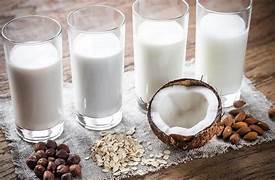
Milk has numerous pros and cons on the internet. However, store bought milk substitutes are often filled with additives. Use the 3-ingredient rule: if more than 3 ingredients, return the item to the shelf. And, always avoid (the unknown) “natural flavors”. Almond milk can have 10 plus ingredients including added sugars, (the unknown) natural flavors, and a very low percent of actual almonds (some as low as 2%). Homemade almond milk offers more control of the product: higher protein, higher fat, and control over the sugar content. Again, if you choose to make almond milk, only use organic ingredients.

Milk can be a positive food or drink option for a sensitive person. Low-fat and fat-free milks have reduced levels of Vitamin-A so (retinyl)palmitate is added to replace the vitamin content lost through the removal of milk fat. However, whole milk does not have this additive. Lactaid brand whole milk (red label) along with First Street offer the sensitive person a milk product with minimal additives and in a lactose-free product. We found that the red-label Lactaid brand whole milk does not have palmitate; cows are pasture-raised; and the cows have not been treated with the artificial growth hormone rbST*.

These options remove two variables that can affect sensitive people: additives, lactose.
Please note that the Lactaid brand ice cream products are not necessarily additive free and do not necessarily offer the same benefits as the Lactaid brand (red-label) milk. One ice cream option is to put Lactaid milk and ice cubes in a blender, then freeze for a refreshing treat. Fresh fruit such as organic strawberries can be added but not all fruits freeze well; freezing fruits can induce another variable to the process. Try freezing both ways and let the sensitive person decide.
Pure vanilla extract is another option to add to a blender for taste, but also another variable. One option is to have the sensitive person taste a small drop of the extract and wait 10-15 minutes to see if there is a change in behavior. This is not a perfect test and, most importantly, should be approved by a licensed medical professional.
Be wary, not all lactose-free products are alike even within a brand. And, avoid plastic containers of milk as a sensitive individual can be affected.
Organic Milk
Organic milk differs from conventional milk by how the cows are treated in three specific ways: cows are not treated with antibiotics, cows not given any hormones for growth or reproduction; and cows that receive at least 30% of their diet from pasture. However, organic does not refer to how the milk is prepared for market. Take care to read the ingredients. Also, keep in mind that organic milk is not lactose-free and lactose can cause behavior and health changes. If organic milk is the primary choice, consider lactose tablets in case there is a problem. (Hint: Lactaid tablets can also help to explore organic cheeses- again remember to focus on ingredients as cheeses can be tricky)
Milk: A Creative Meal Enhancer
Milk was our liberator. Once we discovered red Lactaid, we had a go-to snack, a meal enhancer, and an ingredient that we could rely on. An added bonus, Lactaid lasts about 1 month in the refrigerator; however, refrain from giving the sensitive person (any) milk (product) that has been opened for longer than 2 days. Milk can also be used as a carry along snack in the car. The screw-on tops make it easy to store in an ice chest; remember a cup for everyone to encourage teamwork.
There are many creative ideas of using milk if tolerated:
Breakfast included gluten-free oatmeal and milk starts the day with calming products (oatmeal= magnesium, warm milk= tryptophan, melatonin, and magnesium) topped with fresh organic berries (soaked for 30 minutes in water in case any preservatives were added after picked). Frozen organic berries are a gamble, although they are good to have in the freezer for emergencies.

Mid-morning snack or lunch contains a tasty shake with fresh bananas, pure plain yogurt, ice cubes, and red Lactaid milk. These shakes are terrific for outings, school, or camp. After all, how many children get shakes for lunch? And, encourage everyone to have a taste of shake; the probiotics are wonderful for the digestive system and the sensitive individual will enjoy the camaraderie of sharing the shake.

Bedtime Snack to Improve Sleep Quality
Magnesium, tryptophan, and melatonin are known for calming the nervous system and are considered sleep boosting superstars. So, encourage a pre-bedtime snack of a small bowl of (calming) gluten-free oatmeal (magnesium, melatonin) with milk (tryptophan, magnesium, melatonin). And, warm milk offers a natural method for melatonin versus a tablet or capsule that may have trigger ingredients.

Not everyone believes in pre-bedtime snacks, but a bowl of warm oatmeal with warm milk and a cup of organic chamomile tea about 1-hour prior to bedtime (no technology post-snack) provides a bed time calmness; a good night’s sleep; and a smile in the morning. Warm milk can also be an option instead of oatmeal or tea. This snack time can be combined with reading time or quiet time with family. Sleep quality is a key topic for behavior stabilization and will be covered in another article.
*No significant difference has been shown between milk derived from rbST-treated and non-rbST-treated cows
Sugar In Our Food
Our society consumes 10 times more sugar than 50 years ago: that equates to 10 teaspoons for every teaspoon your grandma consumed with an estimate value of 150 pounds annually. These sugars are not necessarily sugar as in table sugar: sugar or artificial sweeteners can be described by nearly 150 different names.
Some common names are high fructose corn syrup (HFCS), corn syrup, dextrose, and aspartame. Sorbitol, xylitol are classified as sugar alcohols which the FDA does not consider to be food additives; however these sugar alcohols can be detrimental to a sensitive person. Individuals with heart disease, diabetes, kidney disease should also avoid these simple sugars.

Offer your family and yourself the benefits of a knowledgeable food pantry. Read product labels consistently and challenge yourself to learn what additives are red flags. Try the 3-ingredient rule to start, then take steps to further understand what other products to avoid. Feel free to use the cell phone to look up unknown ingredients, or just skip to another product. Our food is not what it was 50 years ago: protect the health of you and your family and learn more about the food you are consuming.
*Confirm with licensed medical professional before altering diet or adding food based on a ResearchMama article.
References:
- https://www.mayoclinic.org/healthy-lifestyle/nutrition-and-healthy-eating/in-depth/artificial-sweeteners/art-20046936
- https://www.hsph.harvard.edu/nutritionsource/healthy-drinks/artificial-sweeteners/
- http://www.clairebaseley.co.uk/2016/10/27/the-truth-about-almond-milk/#:~:text=I%20was%20pretty%20surprised%20to,and%20minerals%20(which%20obviously%20my
- https://medlineplus.gov/ency/article/002332.htm#:~:text=Tryptophan%20is%20an%20amino%20acid,get%20it%20from%20your%20diet.
- https://www.ncbi.nlm.nih.gov/pmc/articles/PMC8442542/, The Impact of Sleep Quality on Quality of Life for Autistic Adults
- https://www.moleculeralabs.com/autism-immune-system-dysfunction/#:~:text=Some%20individuals%20with%20autism%20and,associated%20with%20autism%20spectrum%20disorders.
- https://www.acs.org/pressroom/presspacs/2021/acs-presspac-october-13-2021/warm-milk-makes-you-sleepy-peptides-could-explain-why.html
- https://www.humboldtcreamery.com/news/what-is-organic-milk
- http://www.webmd.com/diet/whattoknowaboutdextrose.com


